What needed to change
Small teams often lose time because requirements live across PDFs, chats, and vague conversations. Before anyone codes, someone has to identify workstreams, assign roles, create tasks, and keep everyone aligned.
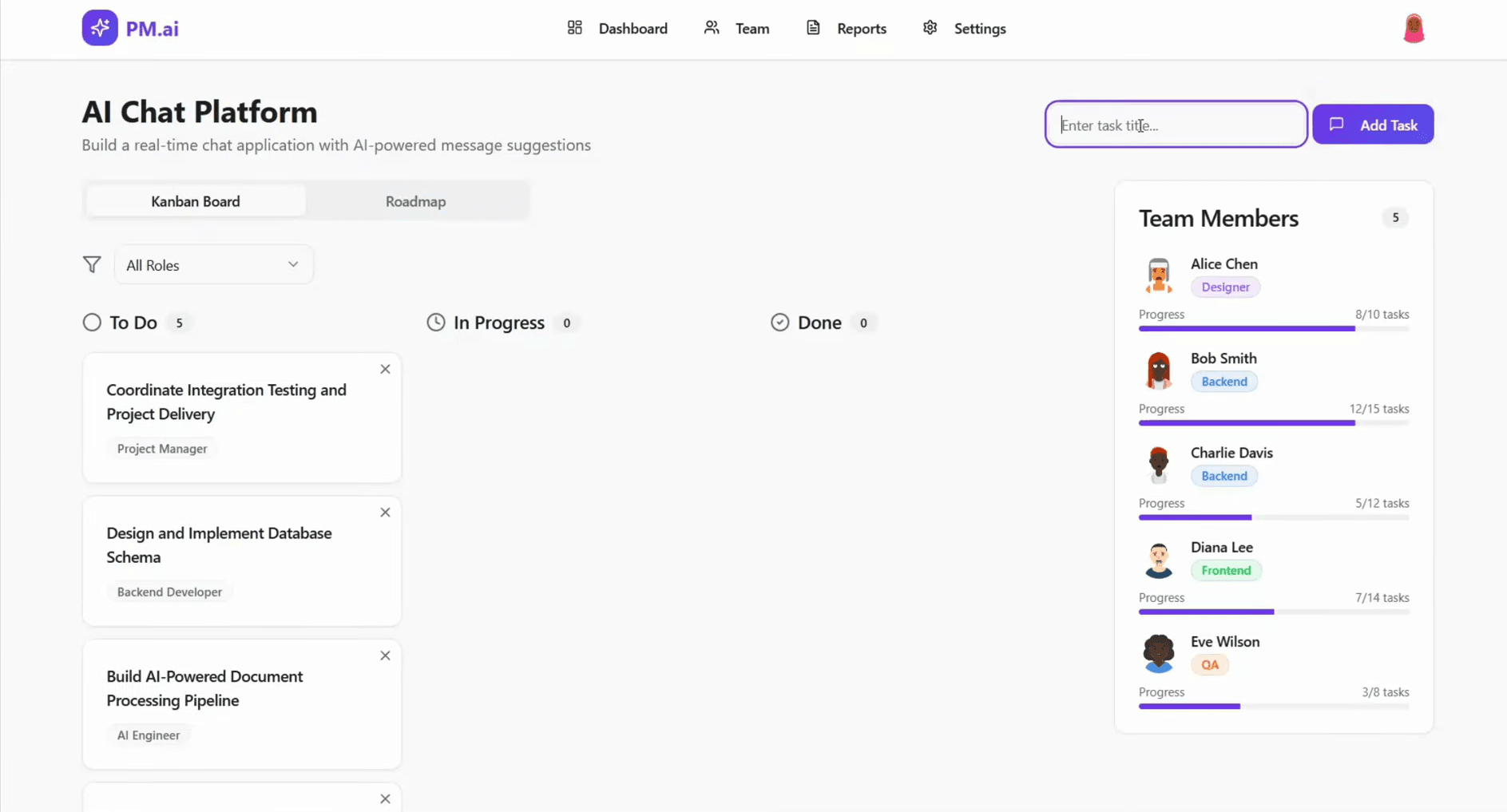
Built a Cal Hacks multi-agent project manager that turns messy briefs into structured roles, tasks, subtasks, and a collaborative execution dashboard.
AI integration & full-stack engineer
Small teams often lose time because requirements live across PDFs, chats, and vague conversations. Before anyone codes, someone has to identify workstreams, assign roles, create tasks, and keep everyone aligned.
A multi-stage AI workflow where a project-manager agent reads an uploaded brief, retrieves relevant context, generates roles and high-level workstreams, then specialist agents expand those into subtasks before validated JSON is inserted into Supabase and rendered as a dashboard.
Produced a functional Cal Hacks 12.0 prototype that parses unstructured project briefs, generates roles/tasks/subtasks, and turns model reasoning into database-backed project state.
LLM products become useful when model output becomes structured, actionable state: database rows, UI components, task ownership, and reliable user interactions.
The constraints, reliability decisions, and system boundaries behind the visible product.
Turned unstructured project briefs into database-backed state by forcing the multi-agent pipeline to emit roles, tasks, subtasks, and ownership as validated JSON.
Split the workflow into planner and specialist-agent stages so one model pass did not have to solve parsing, prioritization, role assignment, and UI state generation all at once.
Used retrieval context, FastAPI boundaries, Supabase persistence, and dashboard rendering to make the agent output actionable instead of just a chat transcript.
Designed the handoff between agents and product state around JSON contracts, validation, and idempotent inserts so retries could not silently duplicate assignments or leave the dashboard in a partially generated state.