Founded and engineered a Mongolian-first multimodal AI nutrition platform that combines vision-language inference, localized food data, and constrained outputs to turn meal photos into calorie and macro logs. The angel-funded platform has reached 50K+ users, $20K+ MRR, and a #2 App Store ranking in Mongolia.
React Native
FastAPI
Vision-language model
AWS
PostgreSQL
Structured outputs
Proof artifactEarlier milestone · #1 Health & Fitness in Mongolia
Founder & CTO
More evidence
Additional artifacts
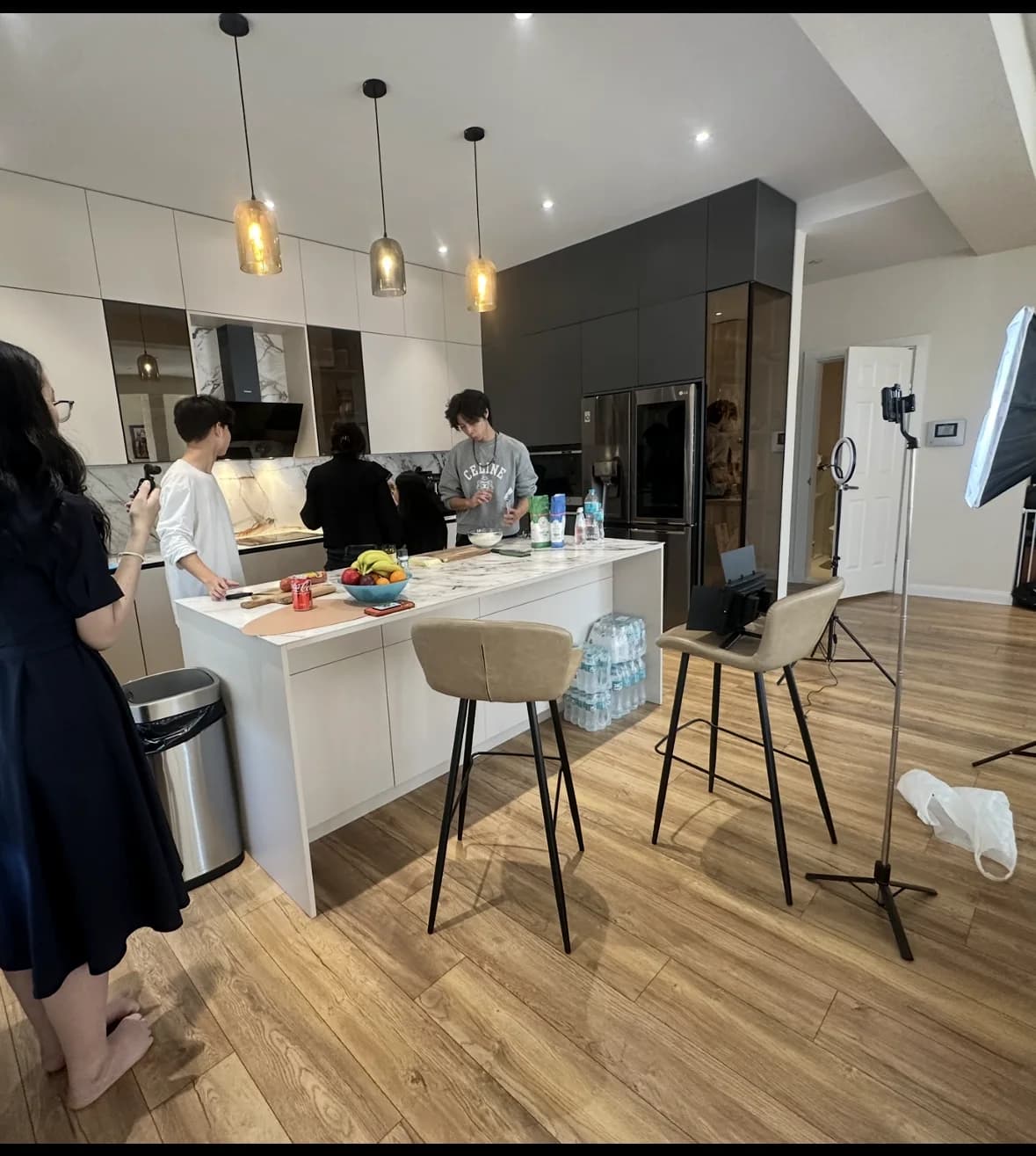
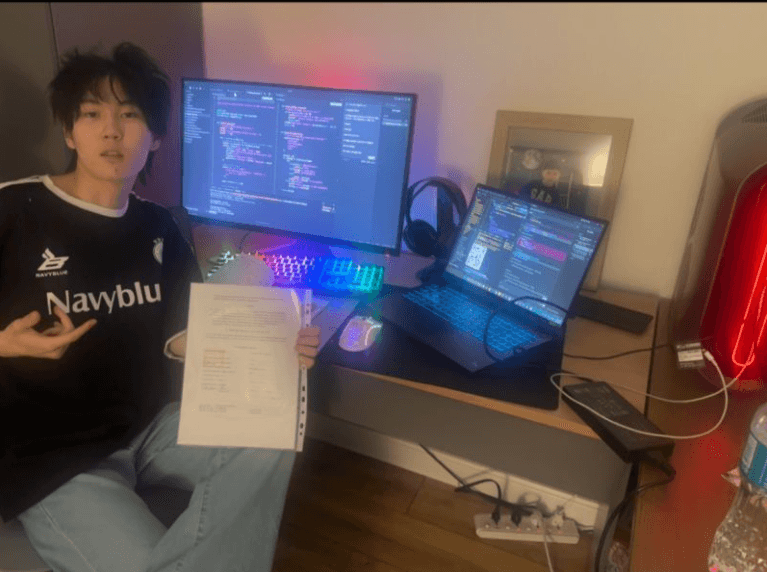
Product identity · NutrioMN app iconDistribution proof · Producing launch content in the living roomFunding proof · Non-dilutive capital
01 / Problem
What needed to change
Global calorie trackers are built around English interfaces, Western food databases, and generic meal assumptions. Mongolian users needed nutrition tracking that understood local language, local dishes, mixed plates, and low-friction logging behavior.
02 / What I built
The engineering response
A React Native mobile product backed by Dockerized FastAPI services on AWS, PostgreSQL/Supabase authentication, subscriptions, scan history, manual food search, and structured AI photo logging. I compressed prompts, cached repeated work, constrained nutrition outputs, and reconciled uncertain predictions against localized food data before persisting calories and macros. I led 6 interns through Agile sprints, code reviews, production monitoring, and releases, connecting model optimization to reliable product delivery.
03 / Impact
The signal
Reached 50K+ users, $20K+ MRR, and a #2 App Store ranking in Mongolia. Angel funding supported the business, while founder-led distribution drove 3M+ views and secured 3 gym sponsorships.
04 / What I learned
The durable insight
Localization is deeper than translation: the model distribution, food ontology, fallback search, database, onboarding, payment flow, and product language all have to fit the community’s real behavior. Multimodal AI only becomes a product when uncertain recognition has safe fallbacks and the output is deterministic enough for downstream calculations.
Engineering depth
How I engineered it
The constraints, reliability decisions, and system boundaries behind the visible product.
01
Treated localization as a systems problem: language, food data, image recognition, onboarding, payments, and nutrition output all had to fit Mongolian users.
02
Routed AI photo logging through Supabase Edge Functions and structured calorie/macro output so the mobile app received predictable data instead of raw model prose.
03
Improved the vision loop with local food images, manual fallback search, USDA data, translation, and local database matching rather than depending on one model call.
04
Built the multimodal boundary around a fine-tuned VLM and schema-validated nutrition objects, then reconciled uncertain predictions against local food records before committing calories and macros to user state.
05
Owned the production surface around the model—Edge Function inference, authentication, subscriptions, analytics, TestFlight distribution, and local payment coordination—so recognition quality connected to a usable consumer product.