What needed to change
Course discovery is fragmented across university catalogs, degree pages, search portals, and constantly changing requirement data. The product needed recommendations that felt conversational without hallucinating course facts.
Owned full-stack course ingestion, backend reliability, and Chrome extension infrastructure for a student product serving 40,000+ users across 16+ university catalogs.
Software Engineering Intern
Course discovery is fragmented across university catalogs, degree pages, search portals, and constantly changing requirement data. The product needed recommendations that felt conversational without hallucinating course facts.
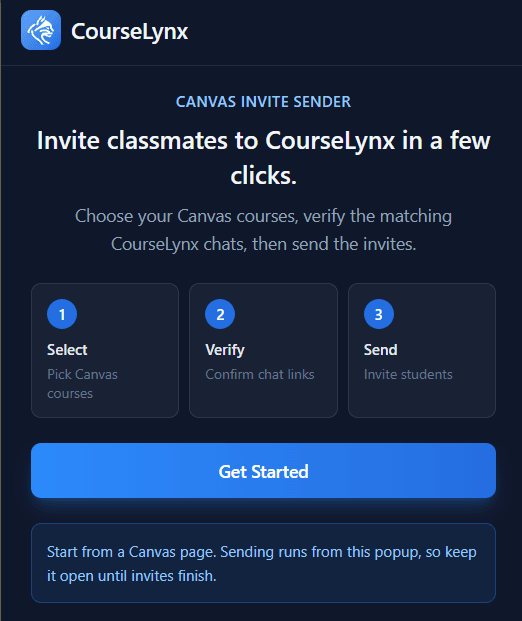
React/TypeScript clients and REST APIs backed by fault-tolerant Python/PostgreSQL ETL pipelines with idempotency, retries, validation logging, duplicate prevention, and Redis caching. I profiled the ingestion path, added indexes and batching, and owned Chrome extension flows across supported-domain checks, content scripts, onboarding, and backend integration.
Supported 40,000+ users across 16+ university catalogs, reached 99.4% ingestion reliability, and reduced p95 latency from 820 ms to 510 ms through profiling, indexing, Redis caching, and batching.
Production AI products need structure around the model: valid outputs, predictable tools, clean ingestion, safe rendering, and defensive extension behavior matter as much as the recommendation itself.
The constraints, reliability decisions, and system boundaries behind the visible product.
Separated flexible LLM reasoning from trusted course data by routing student intent through tools, catalog retrieval, and schema-validated response objects.
Built ingestion reliability around idempotency, duplicate prevention, validation logs, and tests so 16+ university catalogs could be maintained without silent data drift.
Owned Chrome extension flows defensively: supported-domain checks, privacy-safe onboarding, content scripts, and backend calls that fail predictably instead of breaking the student experience.
Measured agent quality at the interface boundary with structured-response validation and deterministic fallbacks, increasing valid assistant outputs while keeping retrieved course facts grounded in university data rather than model memory.